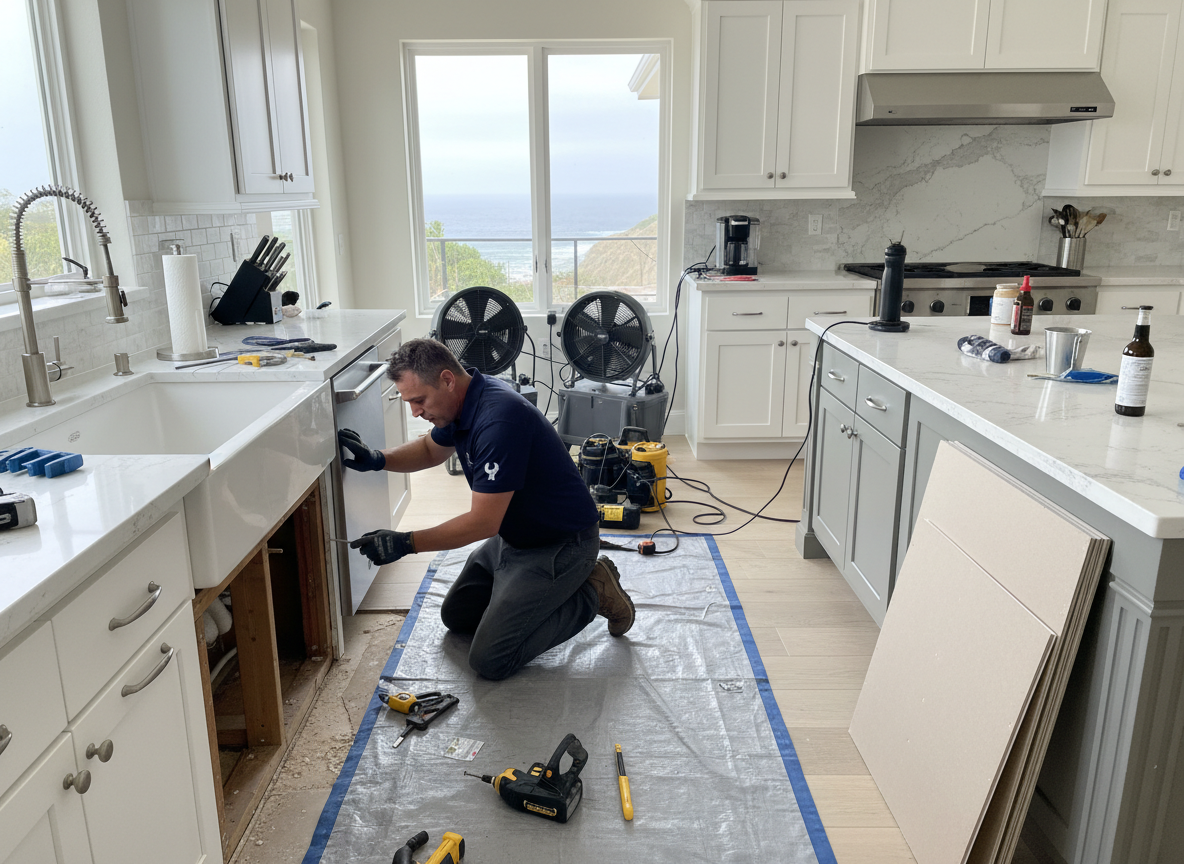
Pacific Palisades kitchens often sit in homes built from the 1950s through 1970s in neighborhoods like Castellammare and Marquez Knolls. These properties feature plaster walls over wood lath and single-wall plumbing that corrodes faster under the mild coastal Mediterranean climate. Foggy mornings keep ambient moisture elevated, so a small dishwasher leak can travel behind cabinets into subfloors before residents notice. Restoration crews must open walls carefully to avoid disturbing original finishes while removing saturated insulation and checking for mold in the confined spaces typical of these kitchens.
Los Angeles County building codes require permits when structural members or electrical runs are affected, which happens frequently once water reaches load-bearing joists near Pacific Palisades Park. Technicians extract standing water with truck-mounted units, then place drying equipment sized for the square footage and monitor moisture readings in hardwood floors common in The Village. Nearby Santa Monica and Malibu jobs show the same pattern: salt air accelerates corrosion on copper supply lines under sinks, turning minor drips into widespread cabinet and drywall damage within days.
Hidden Moisture Risks in Coastal Kitchens
Fog and salt air in Pacific Palisades accelerate corrosion on under-sink fittings and dishwasher hoses. Crews routinely find water trapped in toe-kick spaces and behind refrigerator lines that standard moisture meters miss on the first visit. Opening walls early prevents secondary damage to adjacent rooms in tightly spaced homes near Temescu Park.
Technician insight
In Pacific Palisades, the thing that catches most people out with Kitchen water damage repair is how quickly water travels under the wide plank flooring found in Castellammare homes; the foggy mornings keep the crawl space damp so a leak that looks contained above the surface has already wicked into joists by the time we arrive.
Dishwasher Leak Behind Cabinets
A homeowner in Marquez Knolls noticed buckling vinyl near the sink. We found the dishwasher supply line had split and water had wicked under the subfloor toward the exterior wall. Extraction and targeted drying prevented joist rot; new underlayment and matching flooring restored the kitchen without full cabinet replacement.
How it works
- 1
On-Site Assessment
Technician inspects the kitchen, identifies water source, and maps moisture extent using meters and infrared imaging.
- 2
Water Extraction
Standing water is removed with portable and truck-mounted equipment to stop further migration into subfloors.
- 3
Drying and Monitoring
Air movers and dehumidifiers are placed; daily readings track moisture levels until materials reach safe thresholds.
- 4
Repairs and Restoration
Damaged drywall, cabinets, and flooring are replaced or refinished to match existing finishes.
Pricing
Cost depends on square footage affected, depth of water penetration into subfloors, and whether cabinetry or electrical must be replaced.