2026-10-15 ·
Preventing Water Damage During Rainy Season In Pacific Palisades
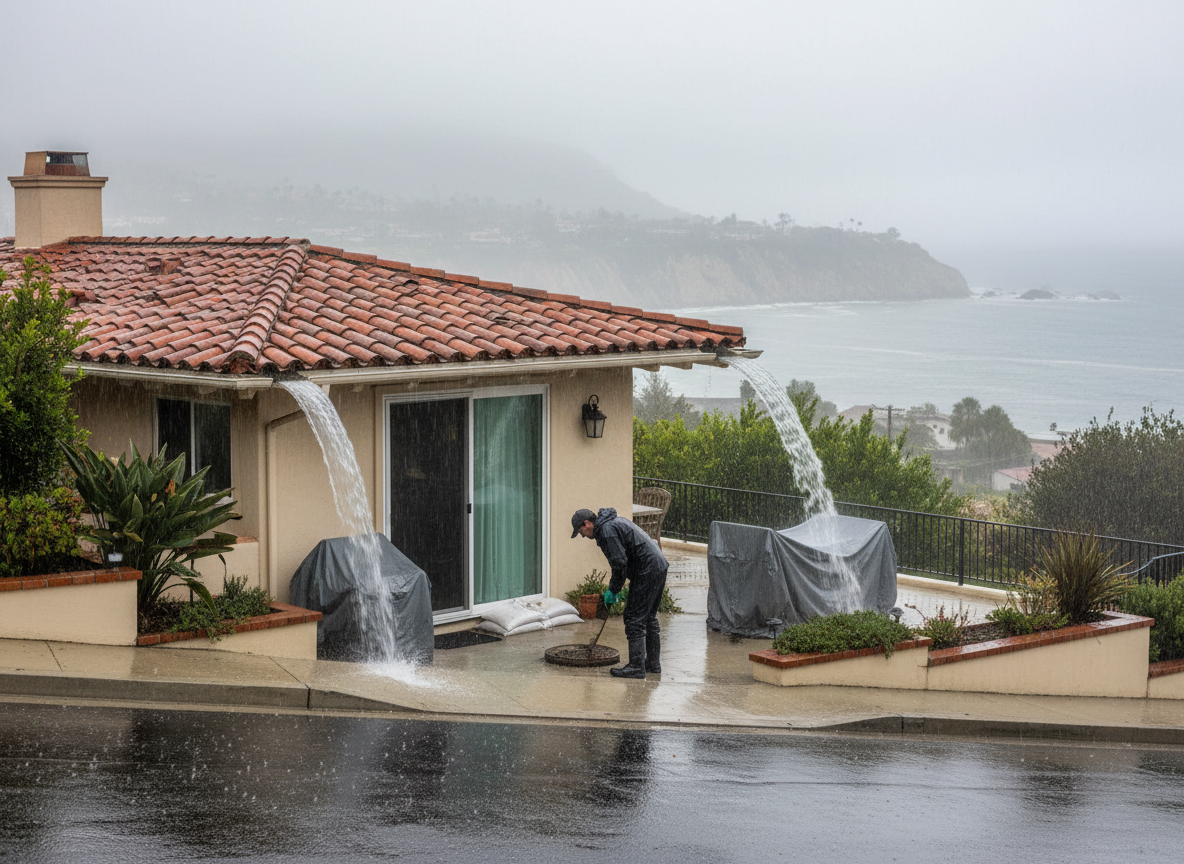
Pacific Palisades properties experience most water intrusion when heavy winter rains meet the area's hilly terrain and older housing stock. Regular pre-season checks on roofs, gutters, and grading around foundations stop the majority of issues before water reaches interior spaces in places like Castellammare or The Village.
Inspecting Roofs and Attics Before Storms Arrive
Pacific Palisades receives its heaviest rainfall between December and March under the mild coastal Mediterranean climate with foggy mornings that keep surfaces damp longer. Homeowners in Marquez Knolls and The Village should examine asphalt shingles or tile roofs for missing pieces and flashing gaps, as these homes often date from the 1950s through 1980s and show wear along ridges exposed to ocean winds. Checking attics for daylight leaks or stained insulation during clear days reveals problems early. Addressing small roof issues now prevents ceiling saturation later, especially near landmarks such as Will Rogers State Historic Park where mature trees drop debris onto roofs. Foggy mornings add extra moisture that can turn minor leaks into larger attic mold problems if left unchecked.
Clearing Gutters and Downspouts in Coastal Terrain
Leaves and pine needles accumulate quickly in Pacific Palisades gutters because of the mix of eucalyptus and native trees common around Temescu Park and Pacific Palisades Park. Clogged gutters cause water to overflow and run behind fascia boards on homes in Castellammare, where slopes direct flow toward foundations. Homeowners should flush downspouts with a garden hose and install leaf guards rated for coastal conditions. In Los Angeles County areas like this, even one heavy rain can send gallons of water against stucco walls if drainage is blocked. Clearing these systems every six weeks from October through February keeps water moving away from the structure rather than pooling against siding.
Improving Foundation Drainage on Hillside Lots
Many Pacific Palisades lots in Marquez Knolls sit on slopes that channel rainwater toward lower walls and crawl spaces. Regrading soil so it slopes away from the house at a minimum of six inches over the first ten feet reduces hydrostatic pressure on older foundations common in The Village. Adding or cleaning French drains around the perimeter helps when clay-heavy soils hold moisture after foggy mornings. Properties near Santa Monica and Malibu boundaries often share similar soil profiles that retain water longer than inland sites. These steps limit basement or crawl-space flooding during sustained rains without requiring major excavation.
Sealing Entry Points and Monitoring During Rain
Windows and exterior doors in Pacific Palisades homes built before 1990 frequently develop gaps around frames due to salt air exposure. Applying fresh exterior caulk and checking weatherstripping before the first storm prevents wind-driven rain from entering living areas. Residents should also watch for water at sliding doors that face prevailing winds from the ocean. When rain begins, walking the perimeter to confirm downspouts discharge at least five feet from the house catches problems while they remain small. For homes already showing signs of intrusion, water damage mitigation addresses moisture before it spreads, and emergency water removal becomes necessary if water enters living spaces. Readers concerned about coastal-specific risks can review water damage risks for coastal Pacific Palisades properties for additional context on local conditions.